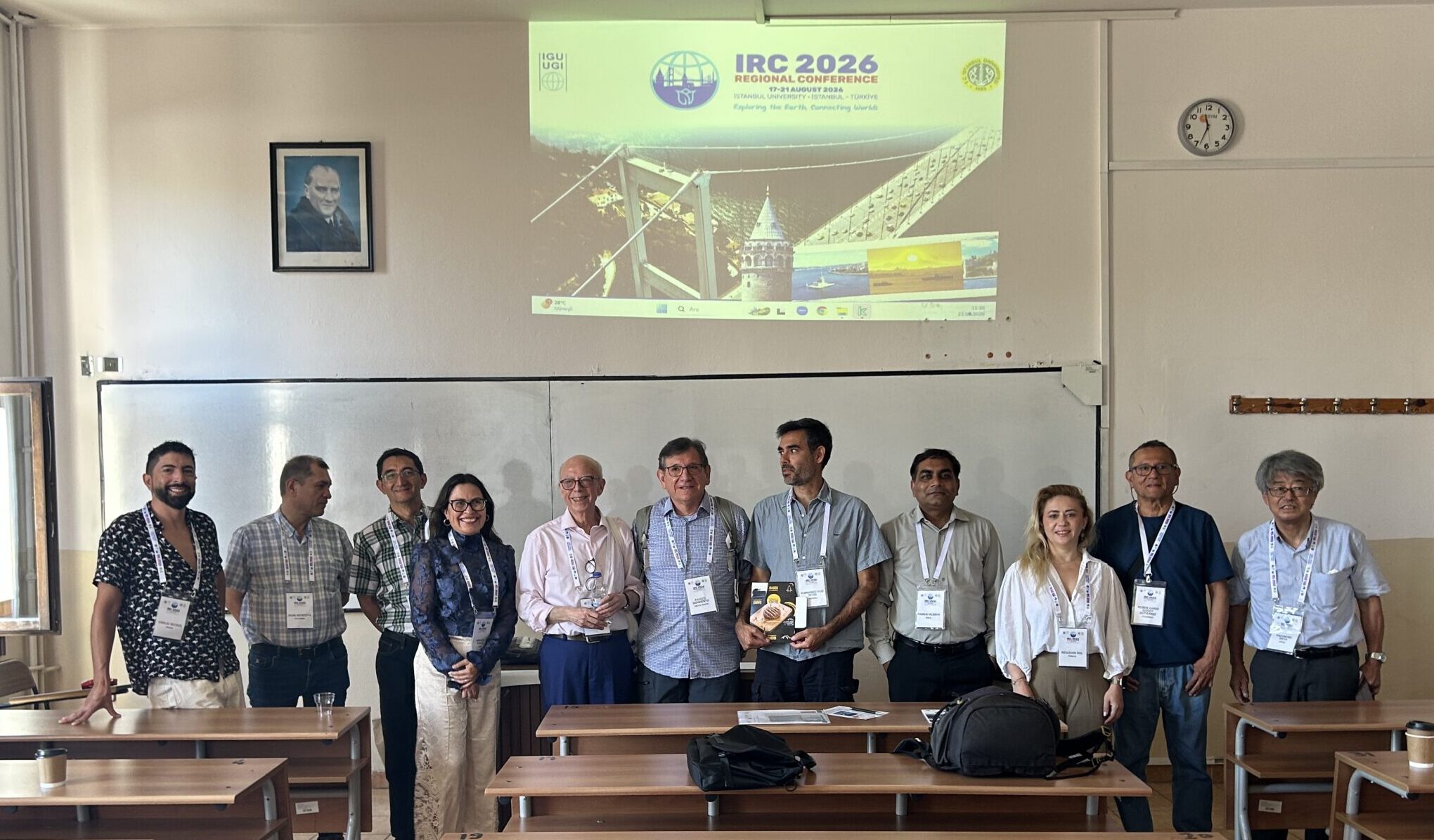
As part of the IGU Regional Conference Istanbul 2026, the IGU Commission of Mountain Studies (CMS) supported three sessions within the C24.37 – Mountain Studies programme, bringing together international research on environmental change, climate resilience, traditional knowledge, and sustainable mountain futures.
Mountain Futures: Cryosphere Dynamics, Hydrology, Hazard and Resilience in a Changing Climate
19 August 2026 | Eratosthenes Room | Chair: Pankaj Kumar
Two consecutive sessions explored mountain environmental processes, cryosphere change, hydrology, climate adaptation, and emerging monitoring approaches. Contributions included:
Depth-Dependent Soil Creep on Humid Temperate Hillslopes: Soil Residence Time Constrained by Turnover — Arihito Kondo et al.
Chemical and Mechanical Denudation in a Mountain Catchment Based on Long-Term Monitoring — Malgorzata Kijowska-Strugala et al.
Tracking Climate Adaptation from Valley to Glacier: A Geospatial and Participatory Study in the Bhilangana Basin, Himalayas — Seema Mehra Parihar et al.
Subglacial Carbonates and Their Palaeoenvironmental Importance — Matija Zorn et al.
Two More Decades of Publication in the Journal of Mountain Science: Advancing Mountain Futures Through Integrated Science — Dunlian Qiu
Hydrographic Evolution and Siltation/Eutrophication Processes of Periglacial Lakes on Horseshoe Island (Antarctica) — Atilla Karataş et al.
Comprehensive Remote Monitoring of Lake Sevan (Armenia) to Assess the Environmental Condition and Changes— Andrei Medvedev et al.
A Transferable InSAR-Optical Framework for Semi-Automated Mapping of Debris-Covered Glaciers — Rakesh Joshi et al.
Climate Variability (ENSO–A-ENSO) and Its Influence on the Hydrogeography of the Venezuelan Andean Highlands — Mejia Joel et al.
Coupling Science and Traditional Knowledge for Sustainable and Regenerative Livelihoods in Mountains
21 August 2026 | Ptolemy Room | Chair: Pankaj Kumar
The third CMS-supported session focused on the connections between traditional knowledge, mountain livelihoods, resource use, and territorial change:
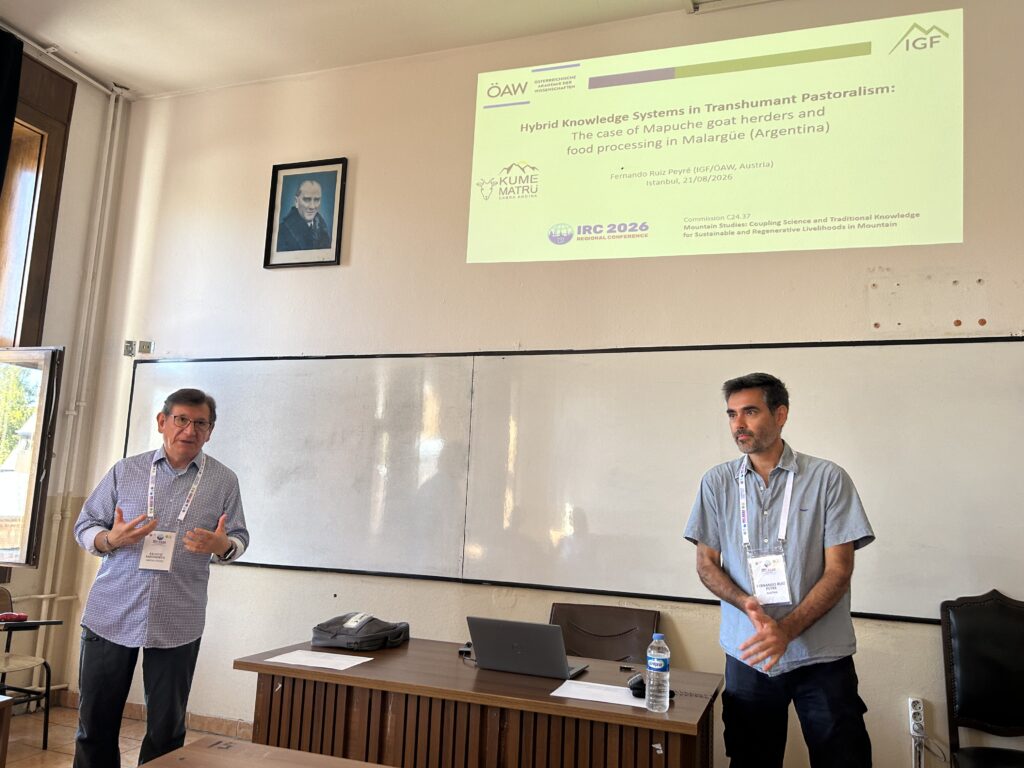
Hybrid Knowledge Systems in Transhumant Pastoralism: The Case of Mapuche Goat Herders and Food Processing in Malargüe (Argentina) — Fernando Ruiz Peyre
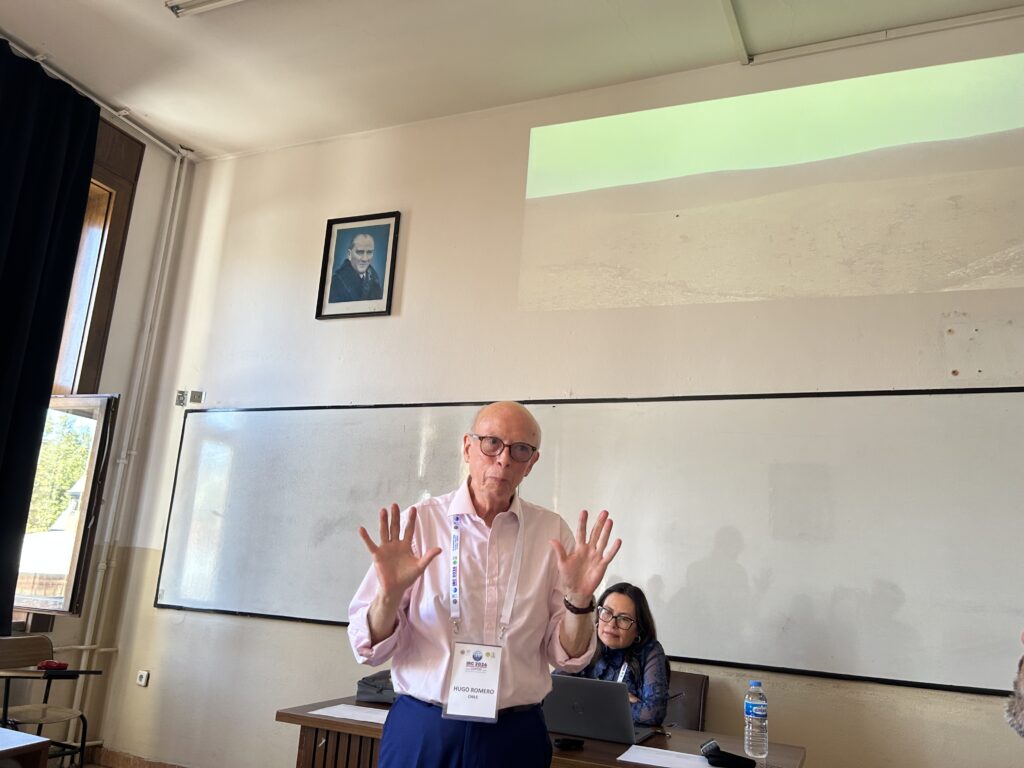
Traditional Knowledge and Territorial Disputes over Lithium Extractivism-Related Resources in the Salar de Atacama, Chile — Hugo Romero et al.
Together, the CMS-sponsored sessions highlighted the interdisciplinary character of contemporary mountain research, connecting physical processes and climate change with geospatial monitoring, traditional knowledge, livelihoods, and sustainable mountain futures.
Further details on the conference programme and sessions are available on the official IGU Regional Conference Istanbul 2026 website. https://irc2026.org/program/