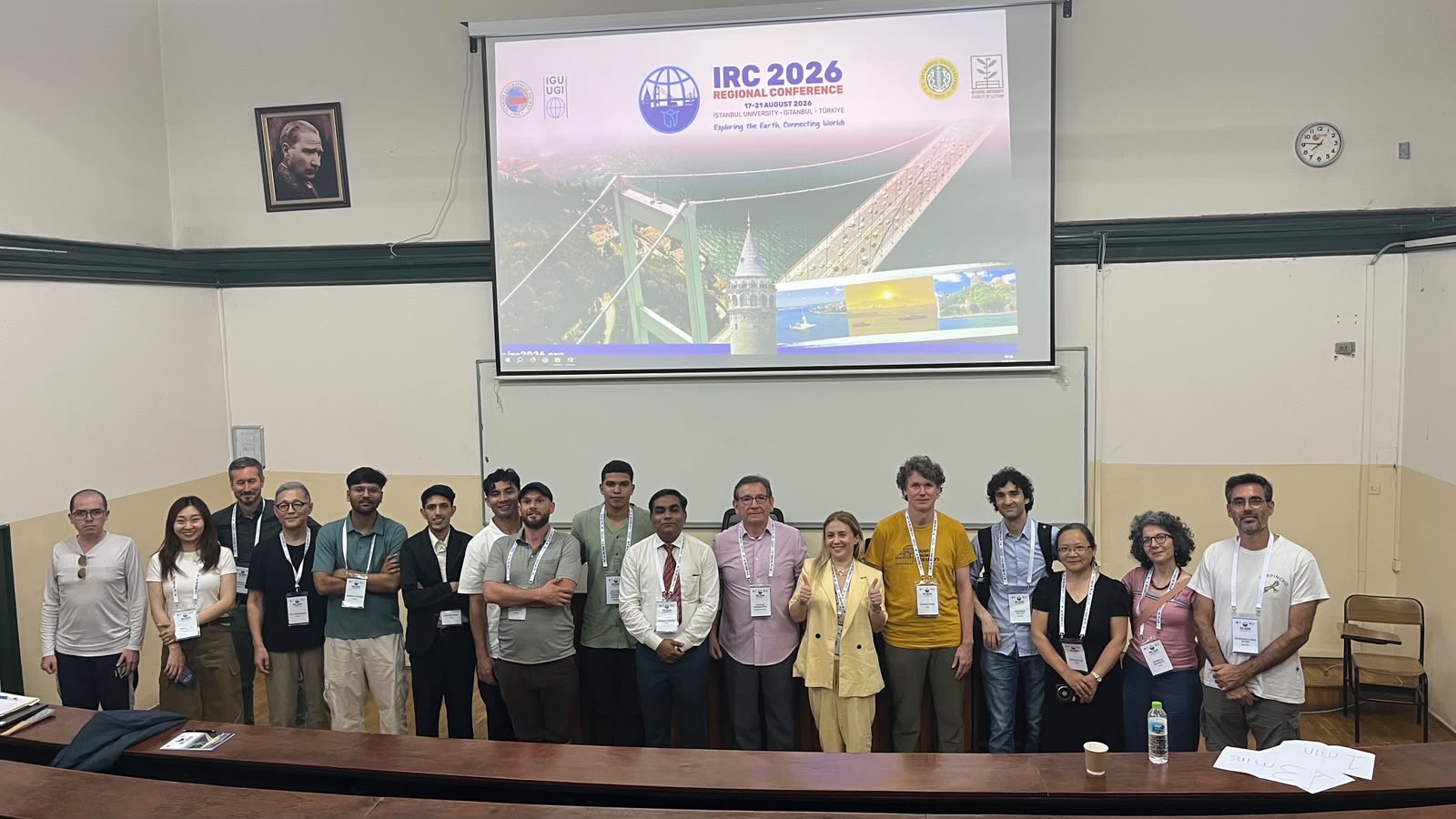
19 August 2026 | Istanbul University, Istanbul, Türkiye
The IGU Commission of Mountain Studies (CMS) successfully organized the International Symposium of Mountain Studies as part of the IGU Regional Conference Istanbul 2026, held at Istanbul University from 17–21 August 2026.
Held on 19 August in the Strabo Room, the symposium brought together mountain researchers from different countries, institutions, and disciplinary backgrounds to exchange perspectives on some of the key environmental and societal challenges facing mountain regions today.
The symposium consisted of two oral presentation sessions, convened and chaired by Fausto Sarmiento and Neslihan Dal, and reflected the broad interdisciplinary scope of contemporary mountain studies—from montology, local knowledge, and mountain livelihoods to political ecology, climate change, cryosphere dynamics, and geomorphometric approaches.
Session I | 15:15–16:15
The first session explored mountain knowledge, communities, and sustainable futures through four contributions:
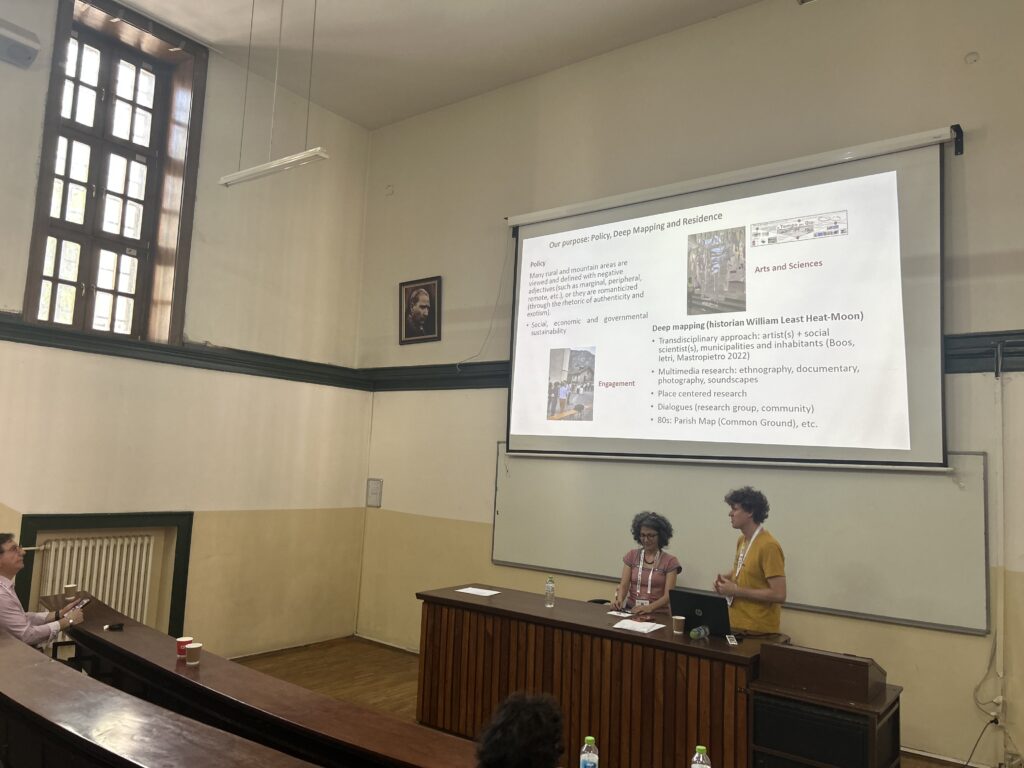
Montology and Deep Mapping for Sustainable Futures in Italian Mountain Areas
Tobias Boos & Daniela Salvucci – Free University of Bolzano
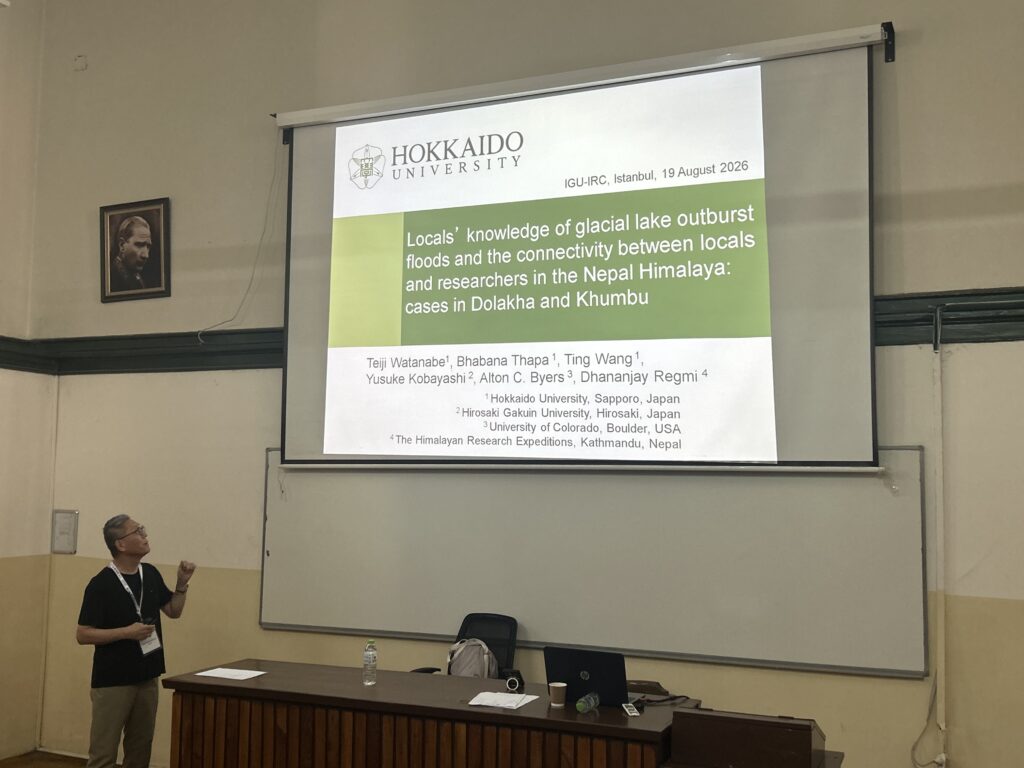
Locals’ Knowledge of Glacial Lake Outburst Floods and the Connectivity Between Locals and Researchers in the Nepal Himalaya: Cases in Dolakha and Khumbu
Teiji Watanabe, Bhabana Thapa, Ting Wang, Yusuke Kobayashi, Alton Byers & Dhananjay Regmi
Chyangra Pashmina as Nepal’s Flagship Export: Impediments and Accelerants
Seth Sicroff – Mountain Legacy International
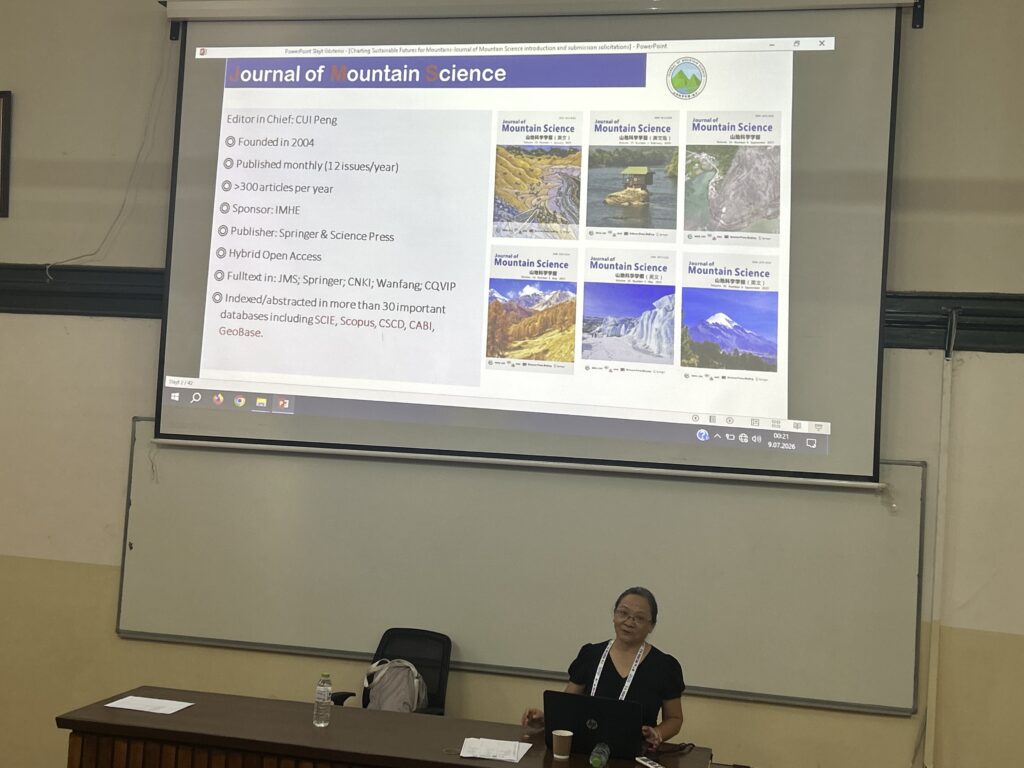
Charting Sustainable Futures for Mountains: Journal of Mountain Science Introduction and Submission Solicitations
Dunlian Qiu – Institute of Mountain Hazards and Environment, Chinese Academy of Sciences
Together, the presentations highlighted the importance of montological perspectives, deep mapping, local knowledge, disaster awareness, mountain livelihoods, and international scientific exchange in understanding and shaping sustainable mountain futures.
Session II | 16:45–18:00
The second session broadened the discussion across different mountain regions and research perspectives:
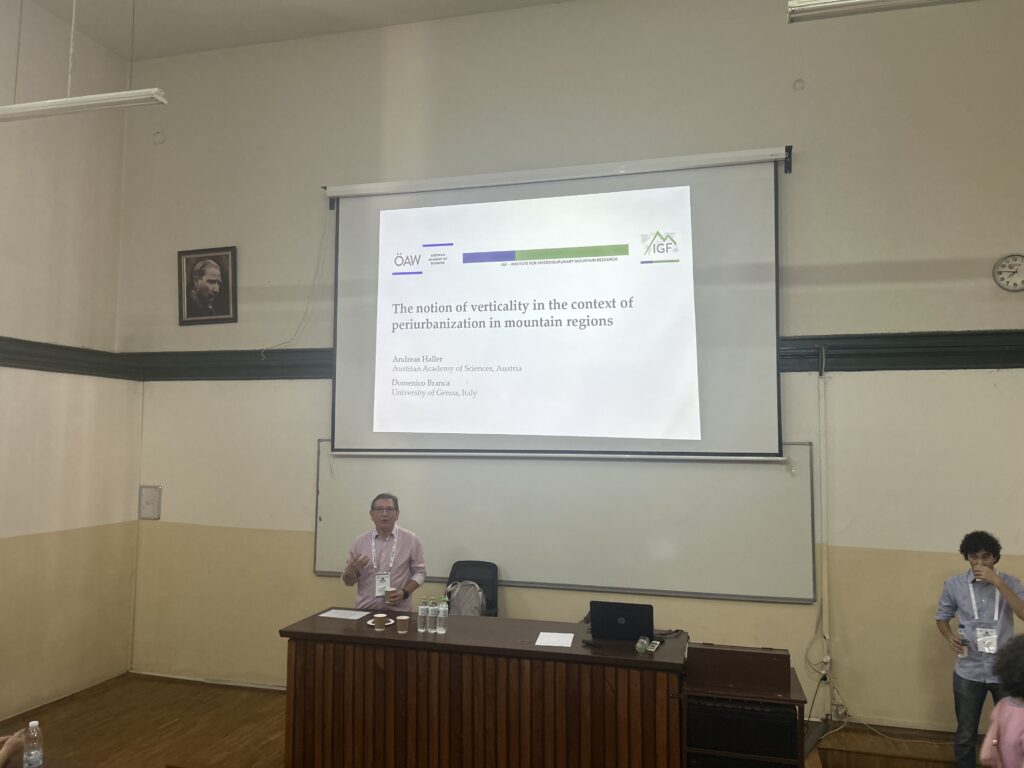
The Notion of Verticality in the Context of Peri-Urbanization in Mountain Regions
Andreas Haller & Domenico Branca
Reclassifying Mount Chimborazo: The Political Ecology of Indigenous Revival Versus Extractivism
Fausto O. Sarmiento, Alden Yépez & Renato Chávez
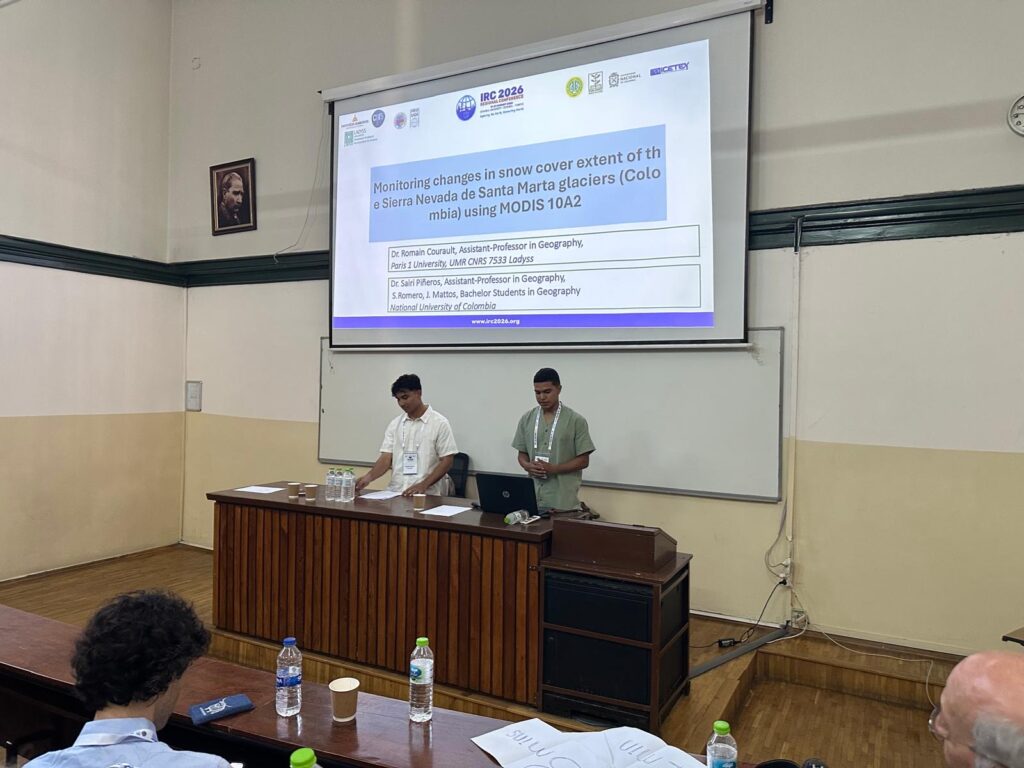
Monitoring Changes in Snow Cover Extent of the Sierra Nevada de Santa Marta Glaciers (Colombia) Using MODIS 10A1
Segundo Romero, Romain Courault, Sairi Pineros & Juan Matos
Climate-Induced Environmental Change and Agricultural Vulnerability in the High-Altitude Region of Lahaul and Spiti, Western Himalaya
Pankaj Kumar – University of Delhi
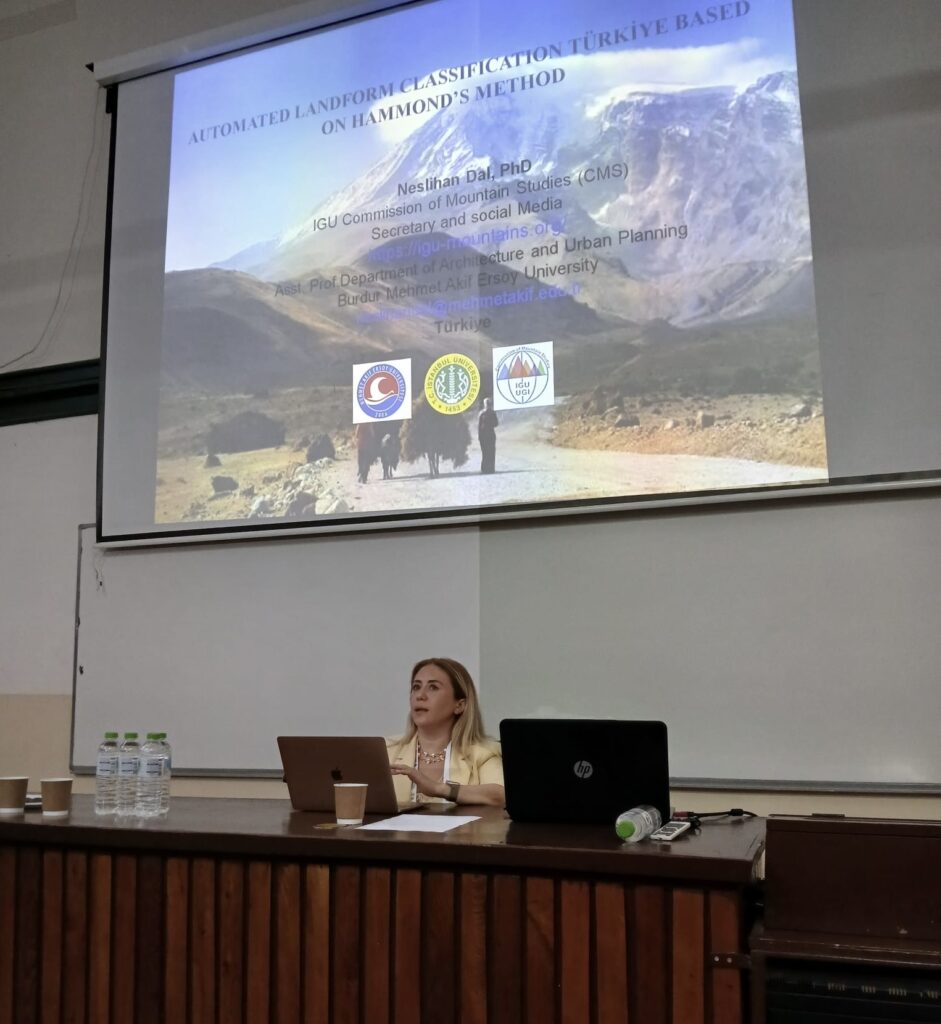
Automated Landform Classification of Türkiye Based on Hammond’s Method
Neslihan Dal – Burdur Mehmet Akif Ersoy University
The contributions connected verticality and peri-urbanization, political ecology and Indigenous revival, glacier and snow-cover change, agricultural vulnerability, and quantitative landform classification, demonstrating the diversity of approaches currently shaping mountain research.
Connecting Mountain Research Across Regions and Disciplines
From European and Turkish mountain landscapes to the Himalayas and Andes, the symposium provided a shared platform for discussing mountains as interconnected physical, ecological, cultural, and socio-economic systems.
The diversity of contributions highlighted the value of bringing together physical and human geography, geospatial approaches, local and Indigenous knowledge, and interdisciplinary perspectives to better understand rapidly changing mountain environments and societies.
The IGU Commission of Mountain Studies warmly thanks all presenters, participants, and colleagues who contributed to the symposium and to the stimulating discussions in Istanbul.
The Commission looks forward to continuing these exchanges and strengthening international collaboration across the global mountain research community.